
 手机站
手机站 微信公众号
微信公众号


项目从干砌石墙(dry-stone wall)这一广泛存在于地中海地区的建造体系出发。从基克拉泽斯群岛(Cyclades)到马耳他乡村景观,这类墙体均无需砂浆,而是依靠石材之间的精准摆放与相互平衡完成建造。它们的建造方式体现出一种与场地直接关联的关系:材料取自当地,墙体仿佛作为土地的延伸自然生长出来。除了划定边界、挡土等功能性作用之外,它们还承载着一种共享的建造逻辑——建立在材料节制、手工经验以及渐进式搭建基础之上。
The project begins with the dry-stone wall, a construction system common across the Mediterranean.Found in contexts ranging from the Cyclades to the rural landscapes of Malta, these walls are built without mortar, relying instead on the careful placement of stone and the equilibrium between elements.Their construction reflects a direct relationship with the site: materials are sourced locally, and the wall emerges as an extension of the ground. Beyond their functional role—defining boundaries, retaining soil—they embody a shared building logic based on economy of means, manual knowledge, and incremental assembly.
▼项目鸟瞰,aerial view of the project © Yorgos Kaplanidis
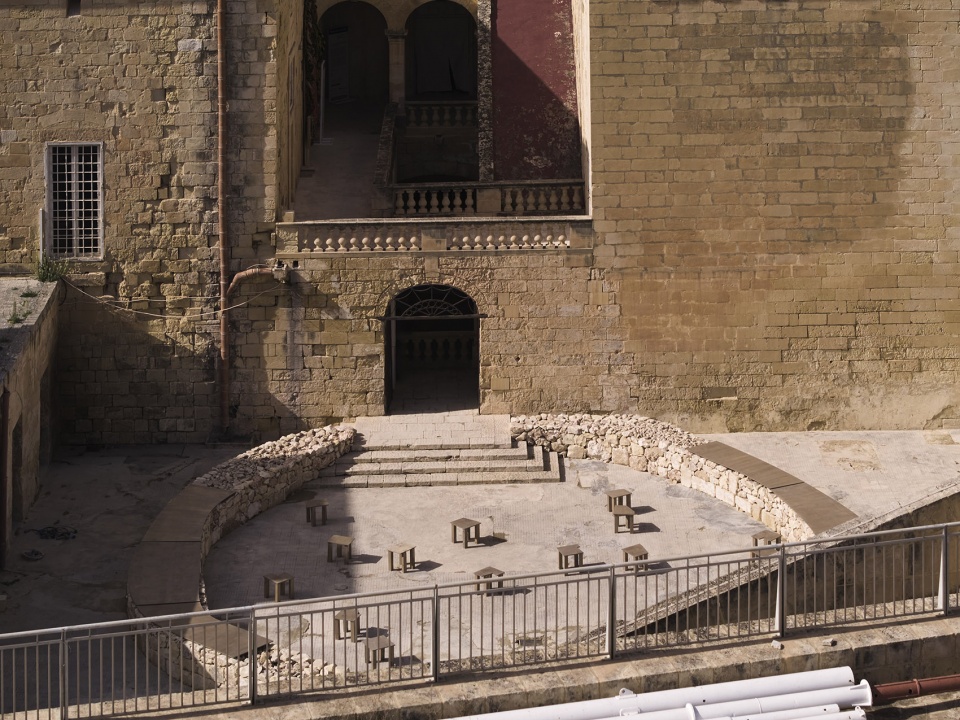
▼项目概览,overview of the project © Yorgos Kaplanidis
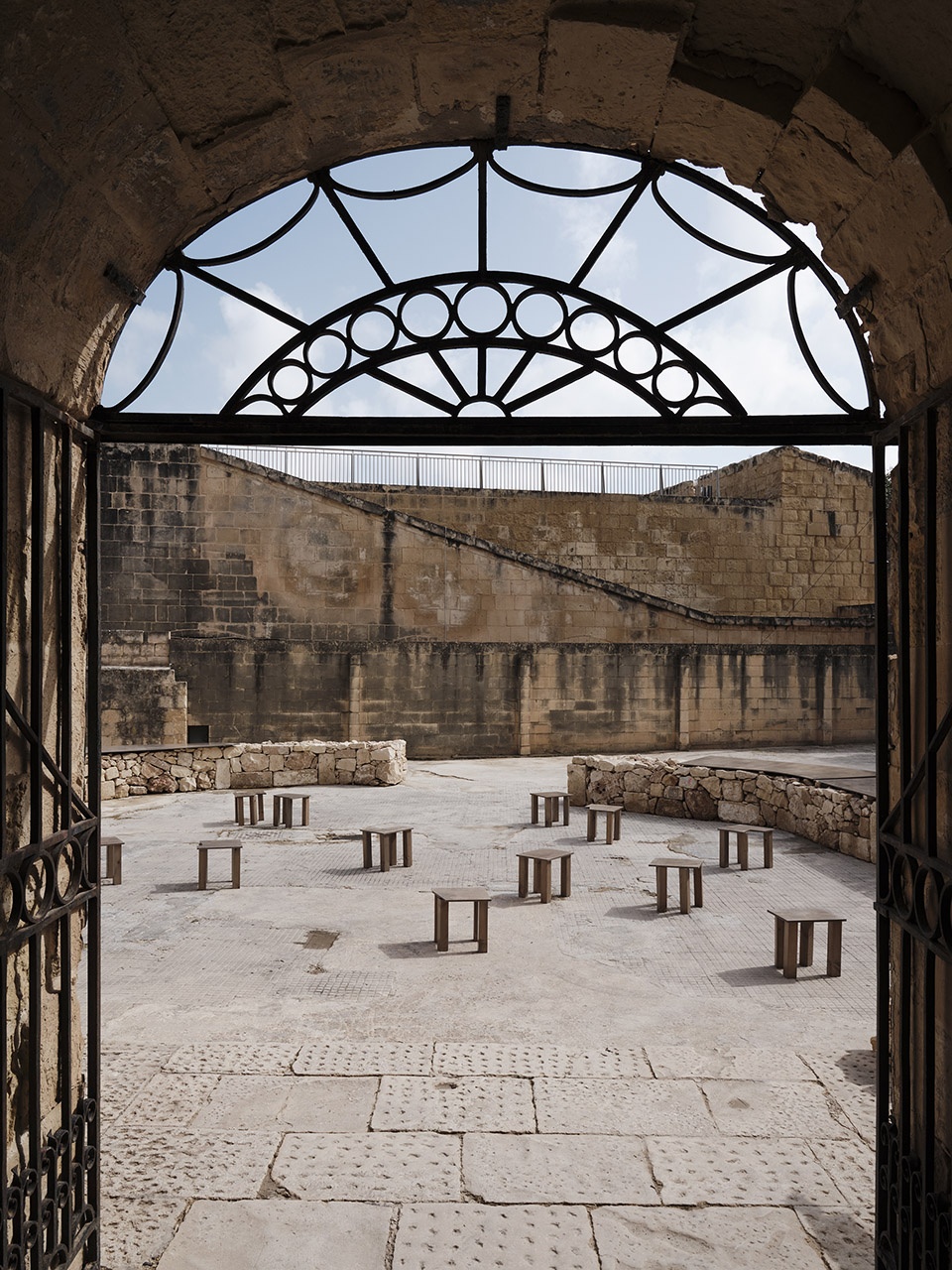
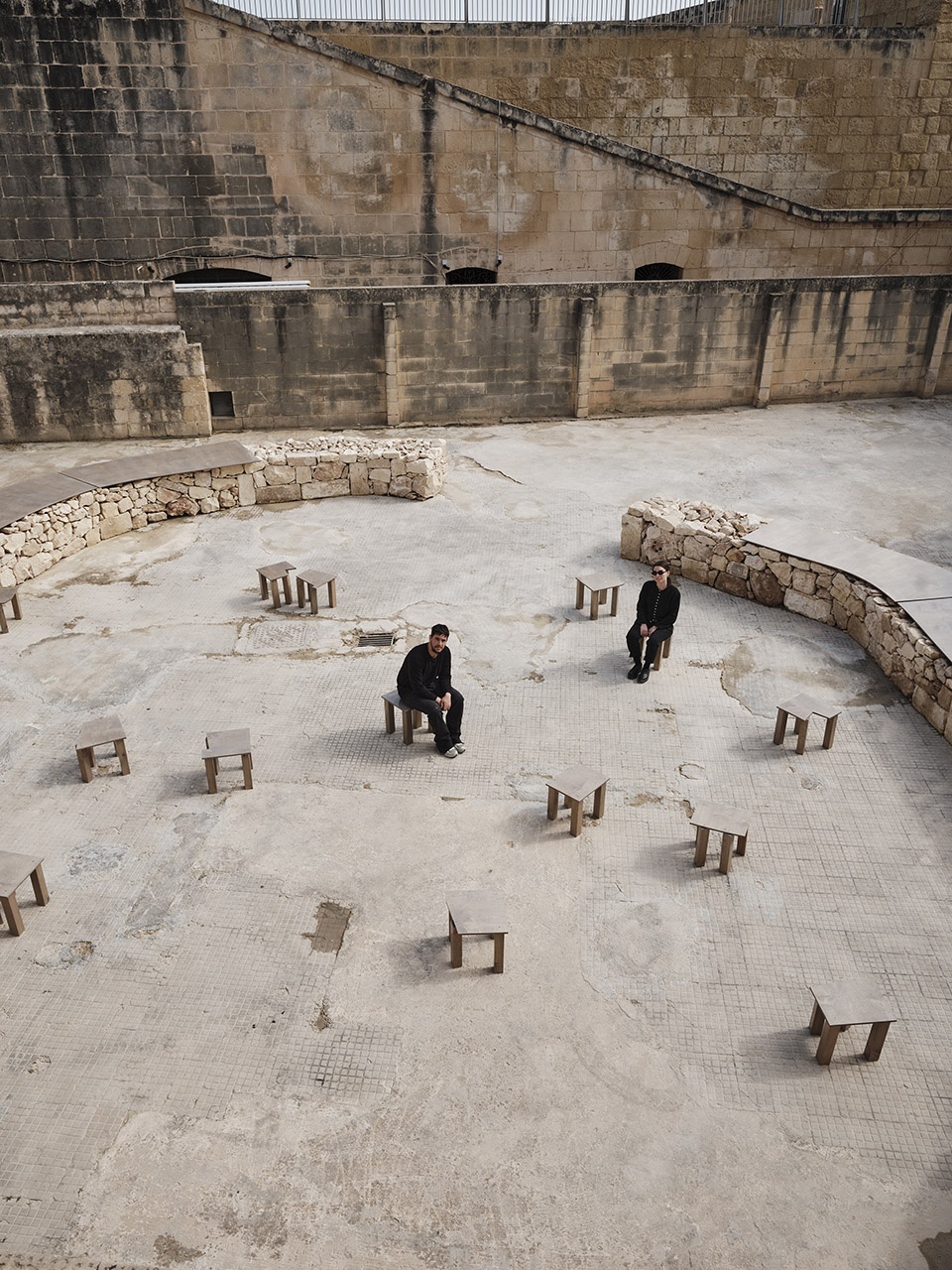
在2026年马耳他双年展(Malta Biennale 2026)中,项目以马耳他的干砌石墙——ħitan tas-sejjieħ——作为参照对象,并重新思考其空间角色。装置位于瓦莱塔(Valletta)旧军械库(Old Armoury)入口处的主庭院中。该空间由厚重石构建筑、层叠的历史痕迹,以及一系列室内与室外之间的过渡界面所定义。作为抵达路径上的关键节点,装置既作为庭院中的一个“物体”存在,同时也是一种重新组织空间占用与感知方式的空间装置。
For the Malta Biennale 2026, the project takes as a reference the Maltese dry-stone wall, known as ħitan tas-sejjieħ, and reconsiders its spatial role. The installation is located in the main courtyard at the entry of the Old Armoury in Valletta, a space defined by heavy stone construction, historical stratification, and a sequence of thresholds between interior and exterior. Positioned at this point of arrival, the intervention operates both as an object within the courtyard and as a spatial device that reorganizes how the space is occupied and perceived.
▼主庭院鸟瞰,aerial view of the main courtyard © Yorgos Kaplanidis
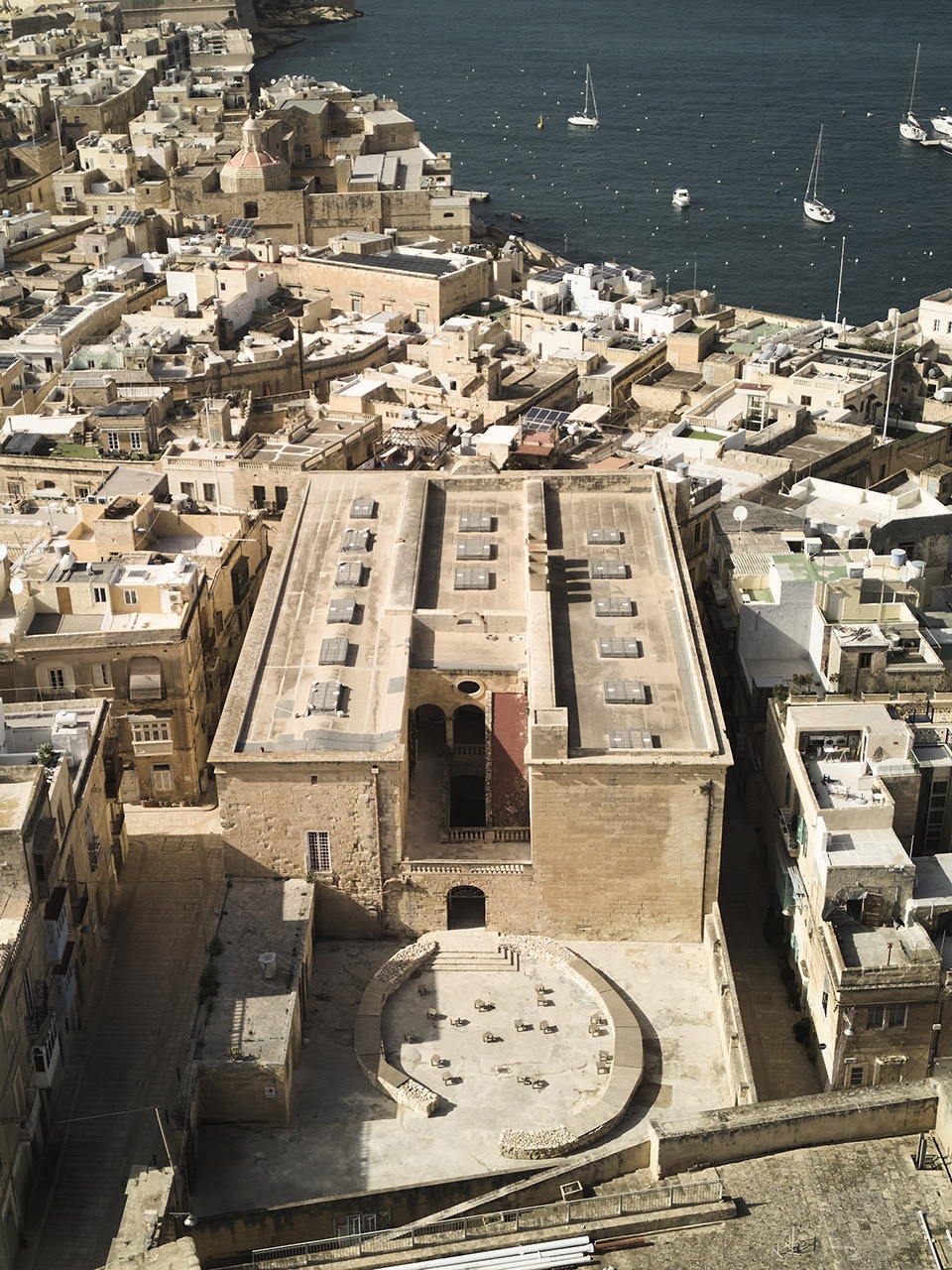
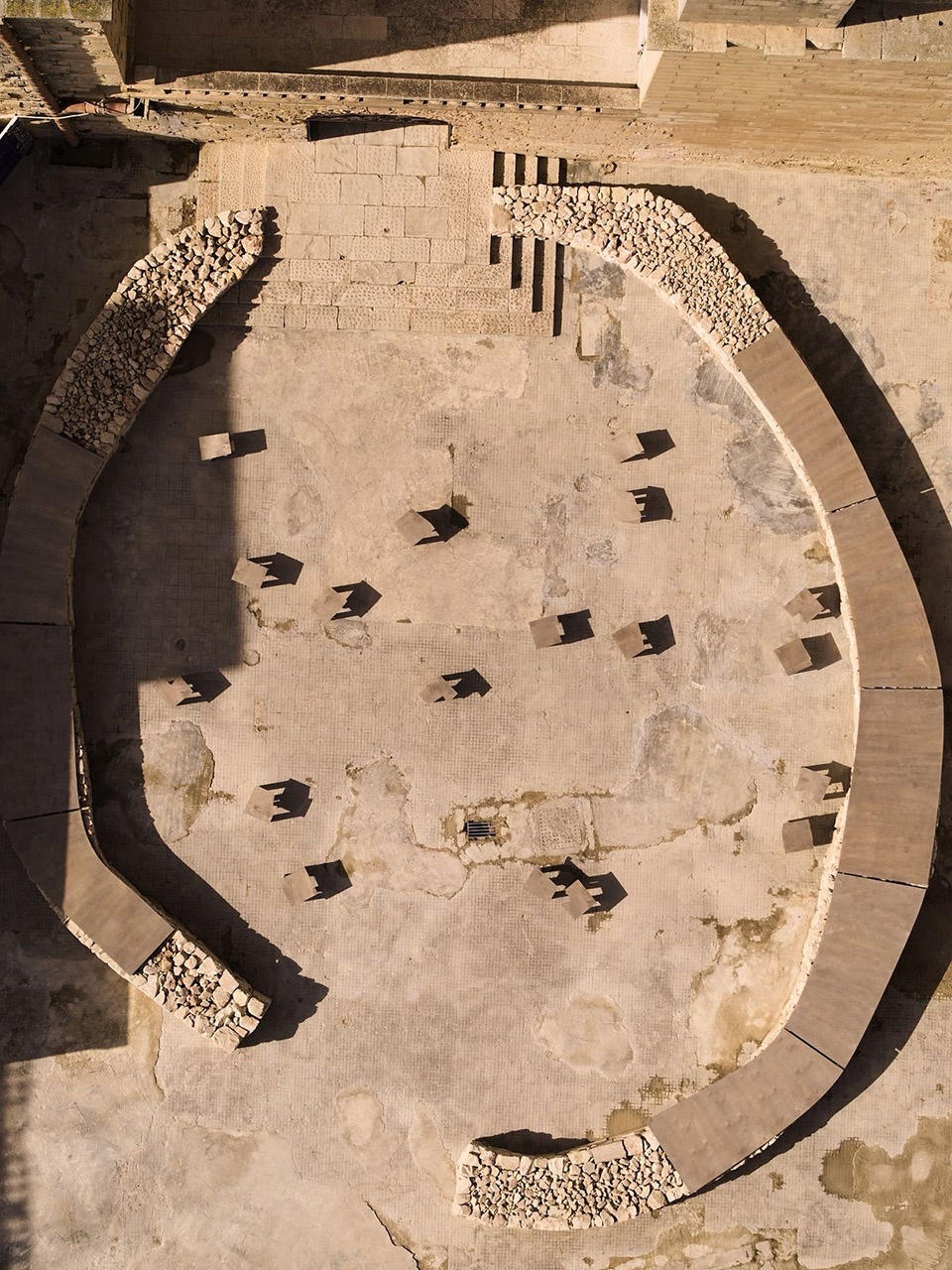
▼装置鸟瞰,aerial view of the installation © Yorgos Kaplanidis
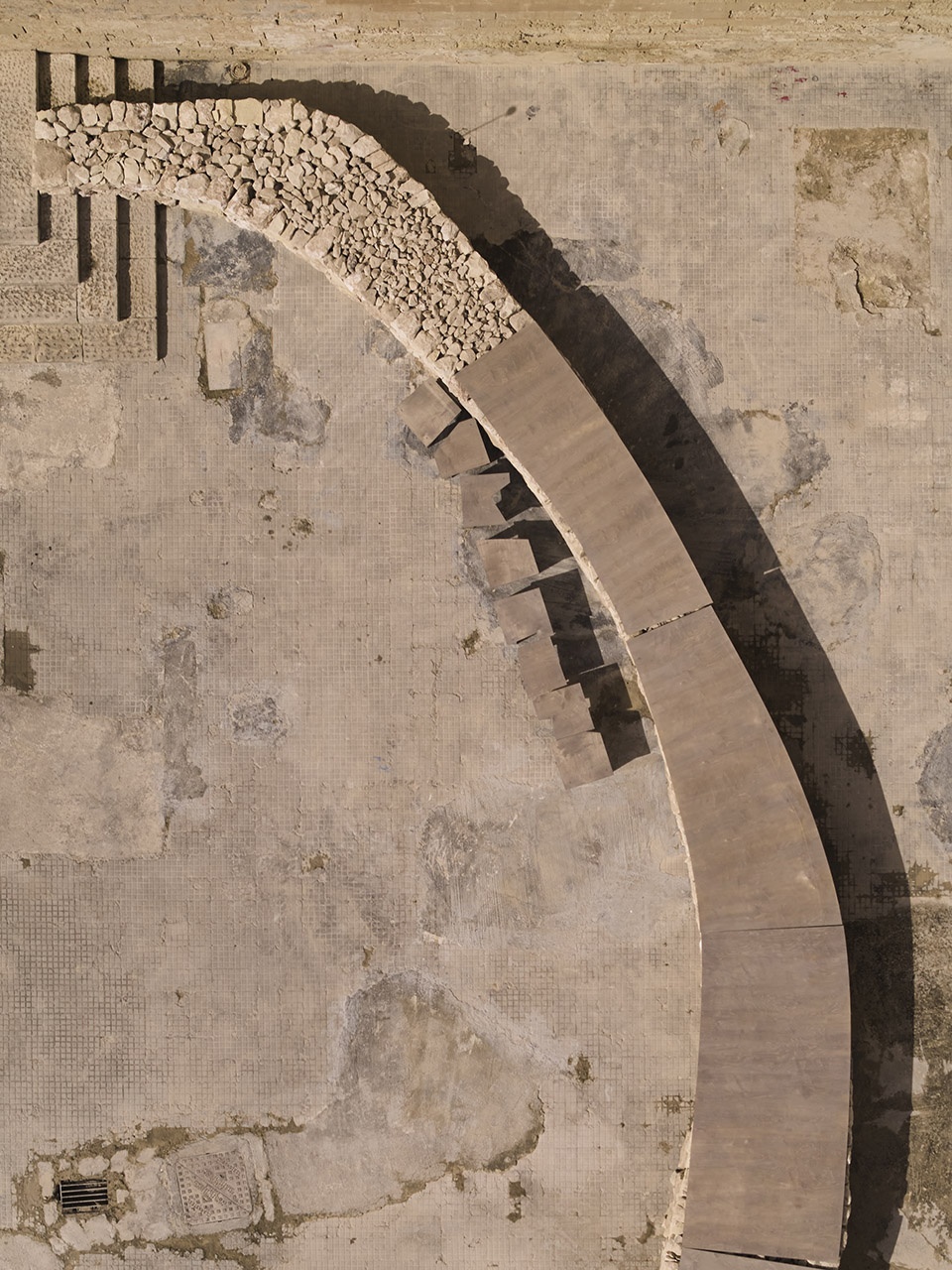
项目不再延续石墙作为边界元素时的线性形态,而是将其重构为圆形结构。这一转变使其功能从“分隔”转向“围合”。圆形定义出一个连续边界,围合出中央空间,以容纳聚会、讨论以及集体性使用活动。
Rather than maintaining its linear configuration as a boundary element, the wall is reconfigured into a circular form. This transformation shifts its function from separation to enclosure. The circle defines a continuous perimeter that frames a central space, accommodating gathering, discussion, and collective use.
▼重构为圆形结构,reconfigured into a circular form © Yorgos Kaplanidis
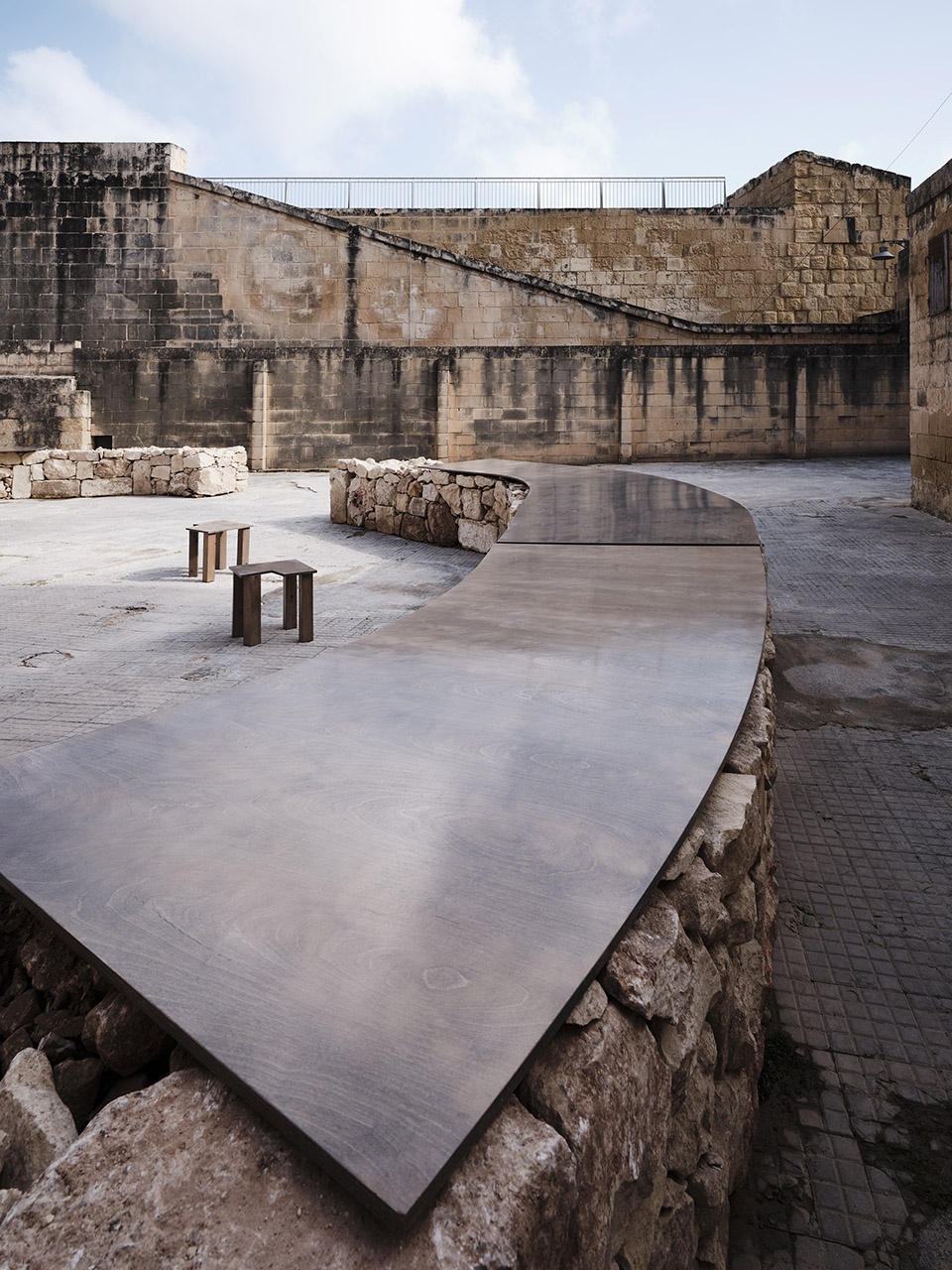
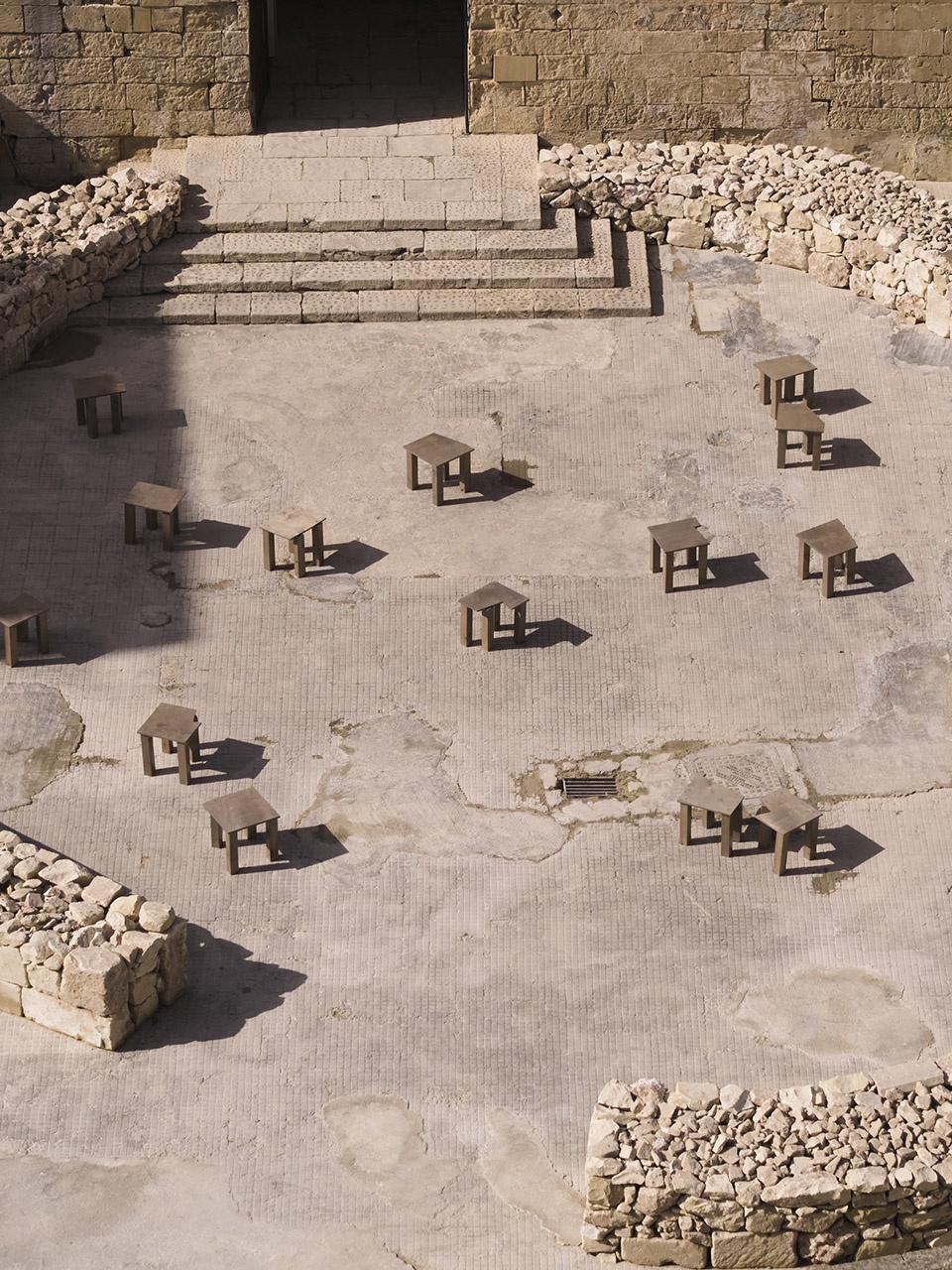
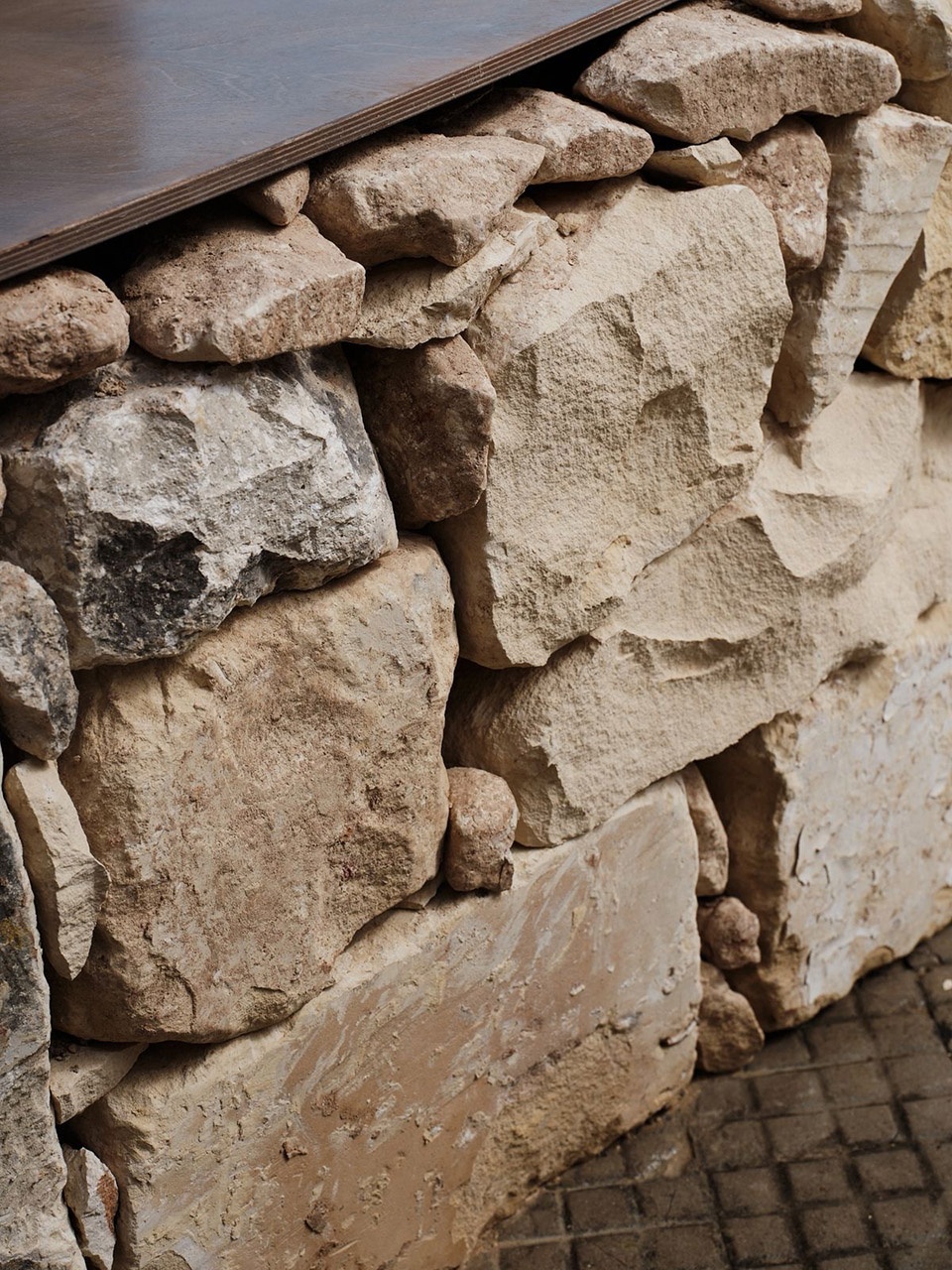
在这一围合空间内部,引入了一系列木质元素以支持空间使用。沿石墙内侧设置了一圈连续的木质台面,形成一道水平基准线,与石材表面的不规则性形成对比。这一木质表面既可作为桌面,也成为书写、用餐、展示以及非正式交流的界面。
Within this perimeter, a series of wooden elements is introduced to support occupation. A continuous wooden top is positioned along the inner edge of the wall, establishing a horizontal datum that contrasts with the irregularity of the stone surface. The timber surface operates as a table—an interface for writing, eating, displaying, and informal exchange.
▼一圈连续的木质台面,a continuous wooden top © Yorgos Kaplanidis
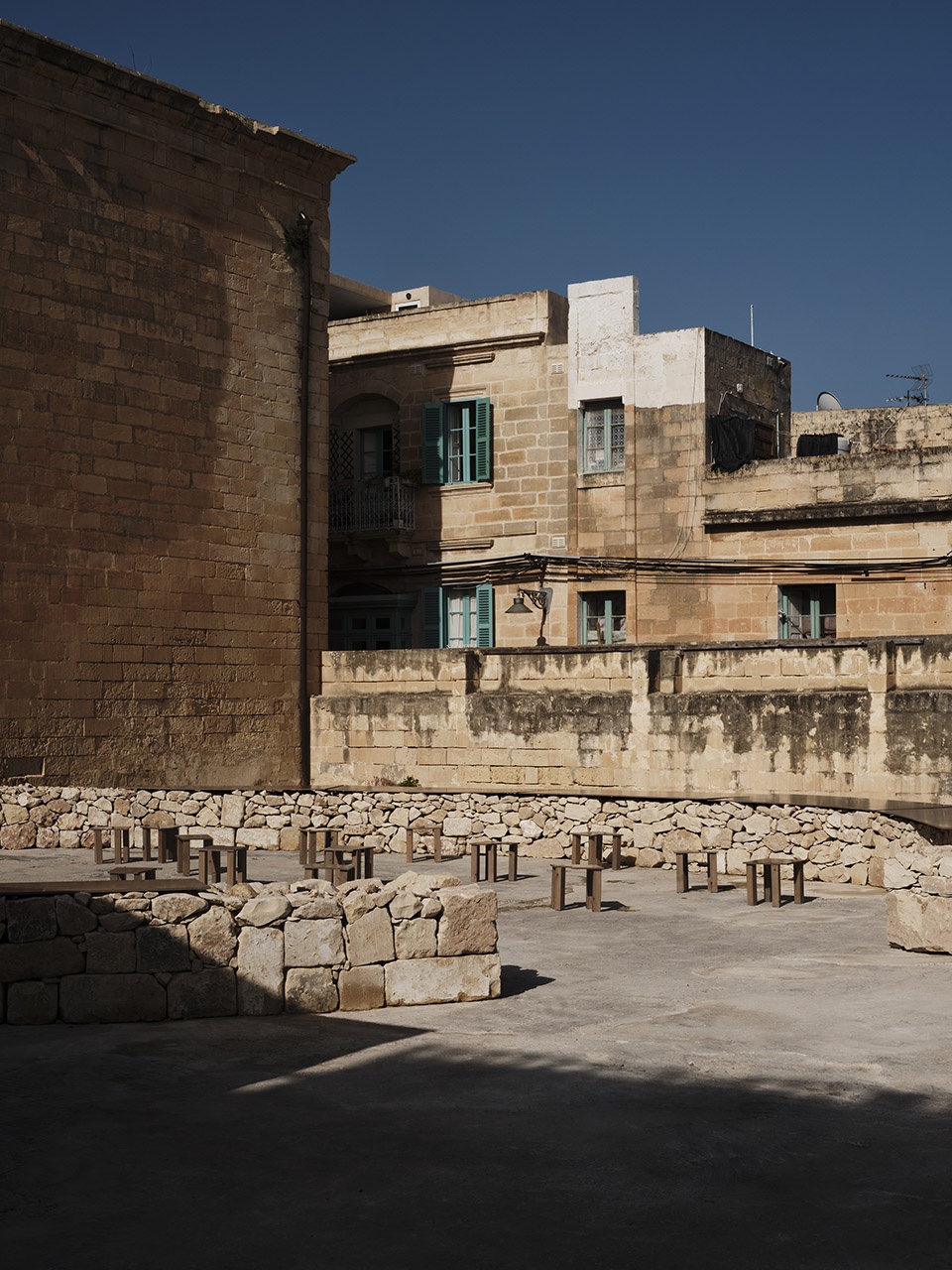
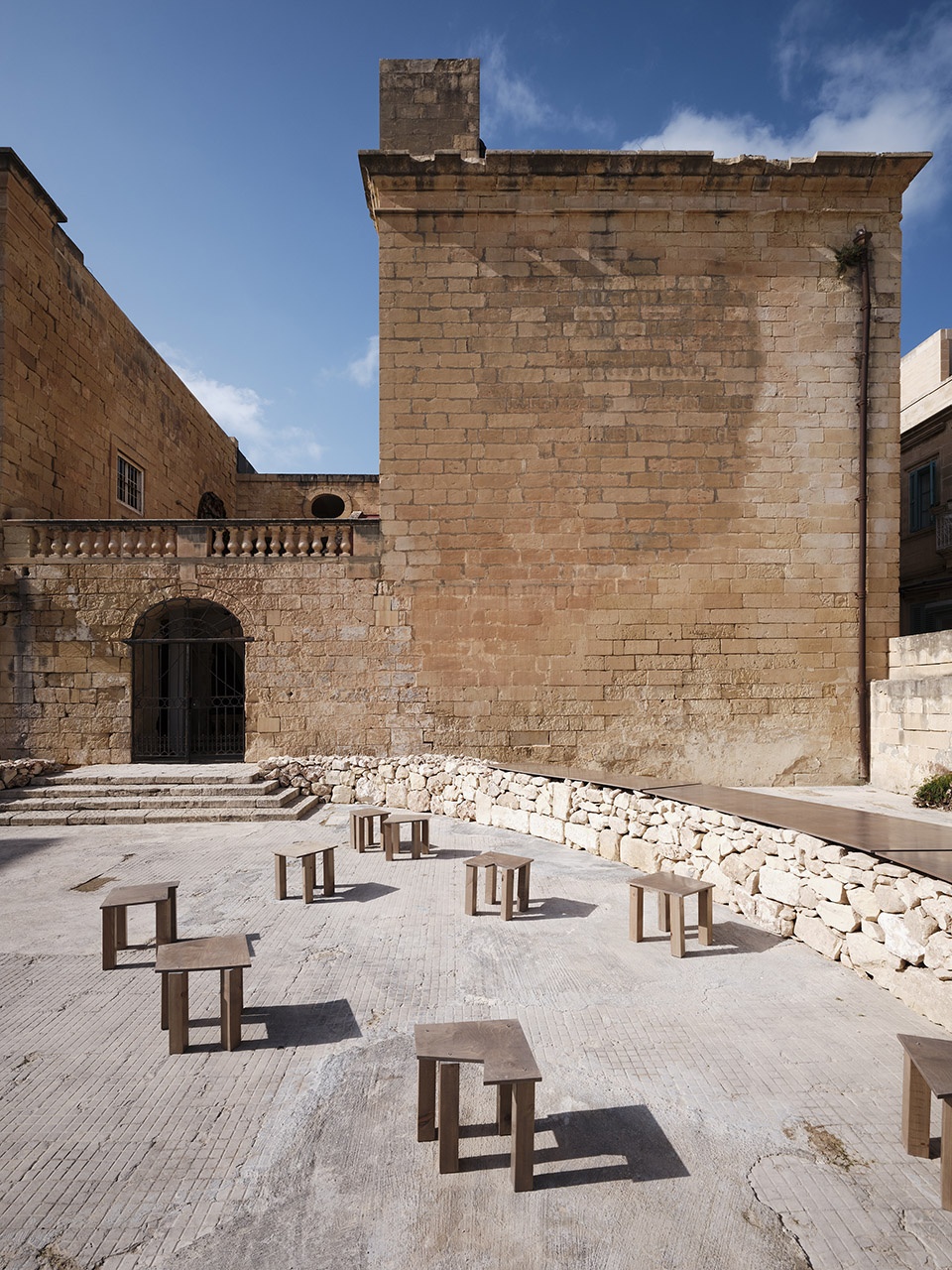
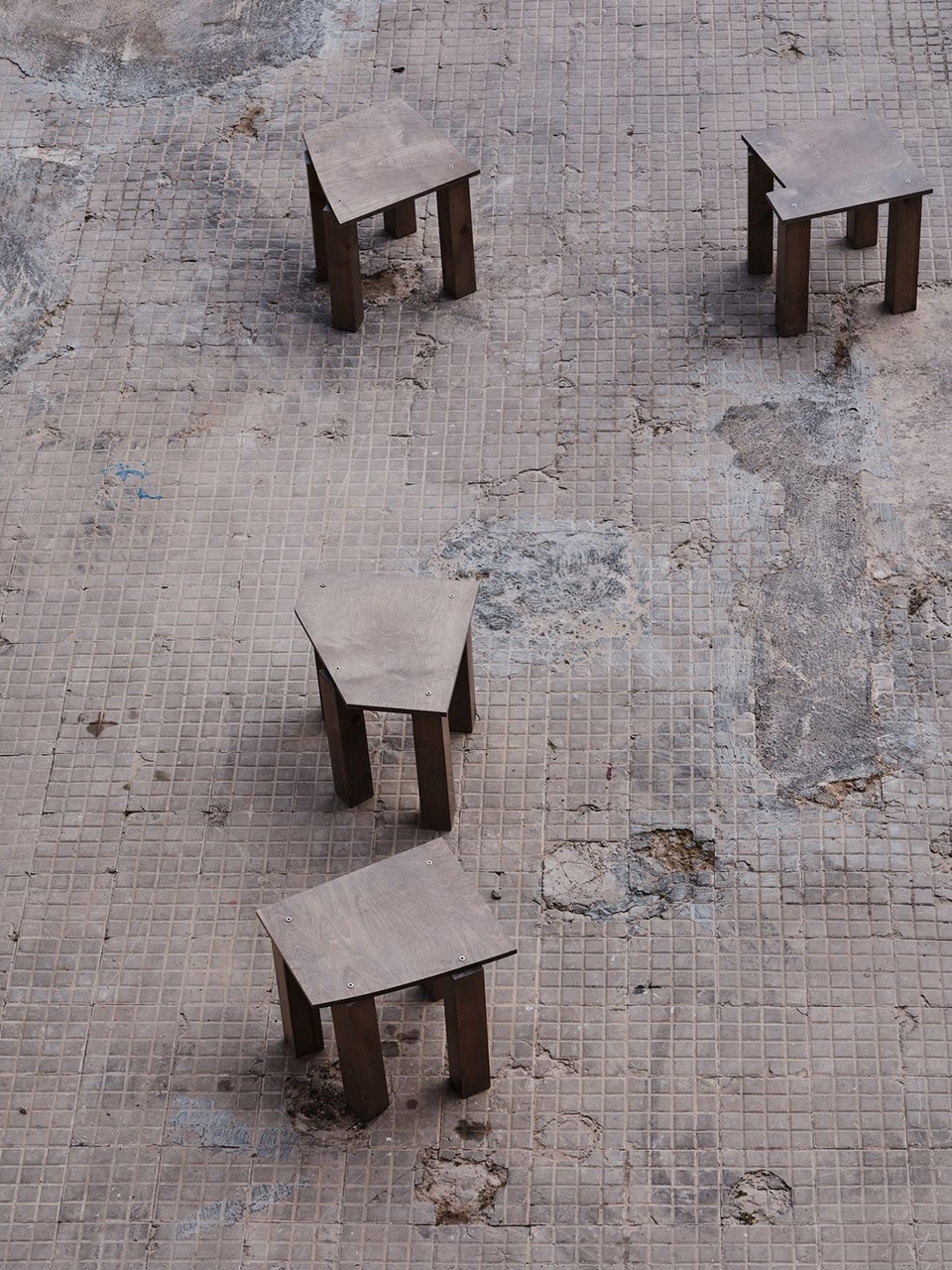
与之相配的是一组简洁的木凳,被分散布置于围合空间内部。其构造同样遵循“减法”逻辑:采用实木构件、最少化连接,并直接呈现材料本身。由于轻巧且可移动,它们能够适应多种使用方式,并鼓励空间形成灵活的组织状态。
Complementing this element, a set of simple wooden stools is distributed within the enclosure. Their construction follows the same logic of reduction: solid timber components, minimal joints, and a direct expression of material. Lightweight and movable, they allow for multiple configurations and encourage flexible use of the space.
▼简洁的木凳,simple wooden stools © Yorgos Kaplanidis
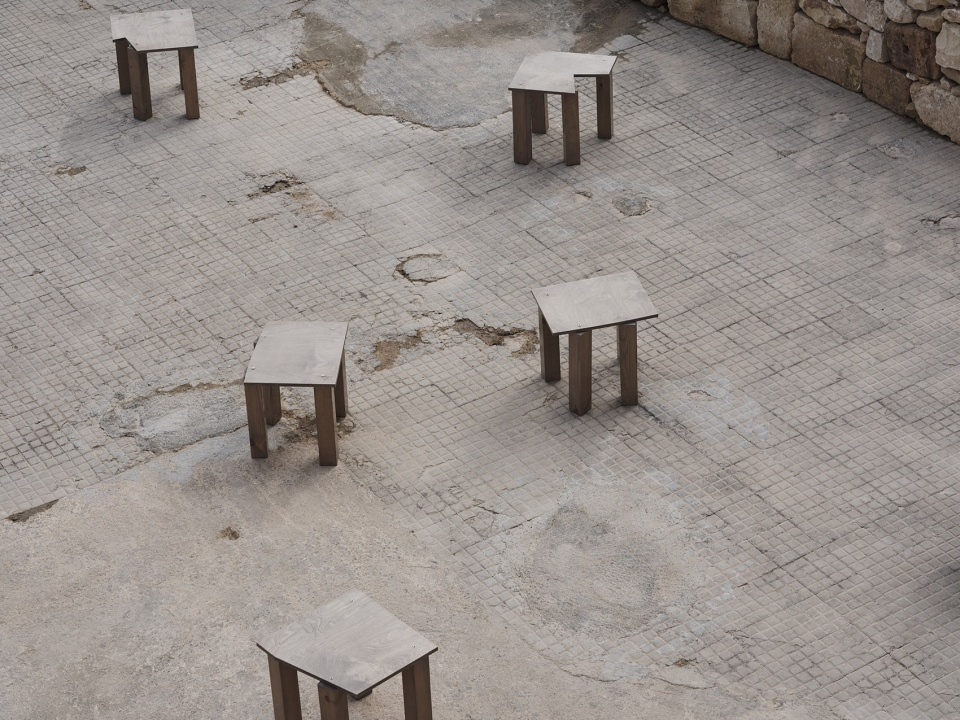
▼鼓励空间形成灵活的组织状态,
encourage flexible use of the space © Yorgos Kaplanidis
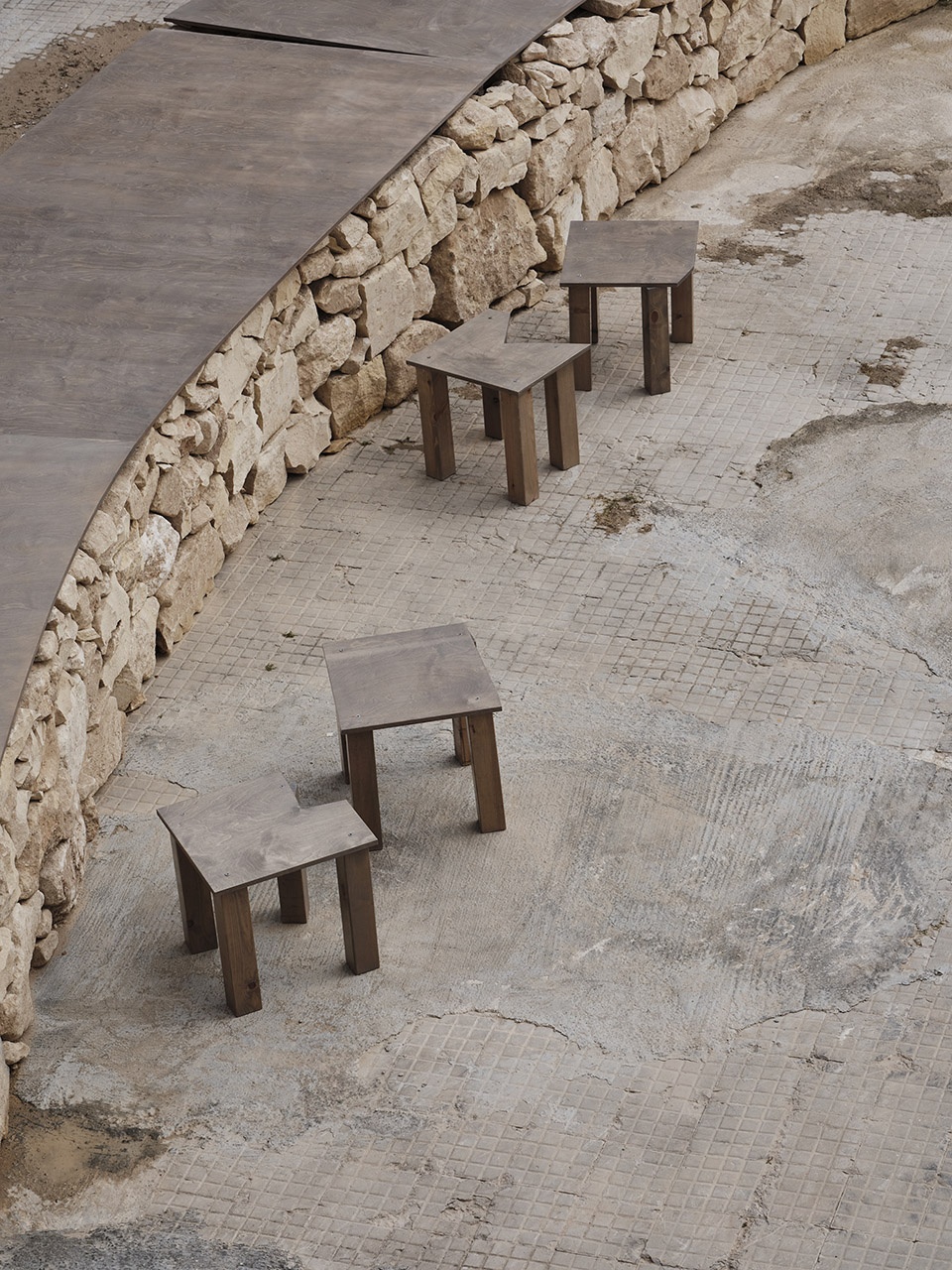
整个装置通过极少的建造手段展开:相同的建造原则——干式组装、单元重复以及依赖平衡——被延续保留,但几何关系则被重新定义。木质元素的加入引入了第二种材料语言:精准、平整且富有触感,从而在粗粝石材与光滑木材之间建立起一种对话关系。
The intervention operates through minimal means: the same constructive principles—dry assembly, repetition of units, and reliance on balance—are maintained, while the geometry is altered. The addition of timber elements introduces a second material register—precise, planar, and tactile—establishing a dialogue between the roughness of stone and the smooth continuity of wood.
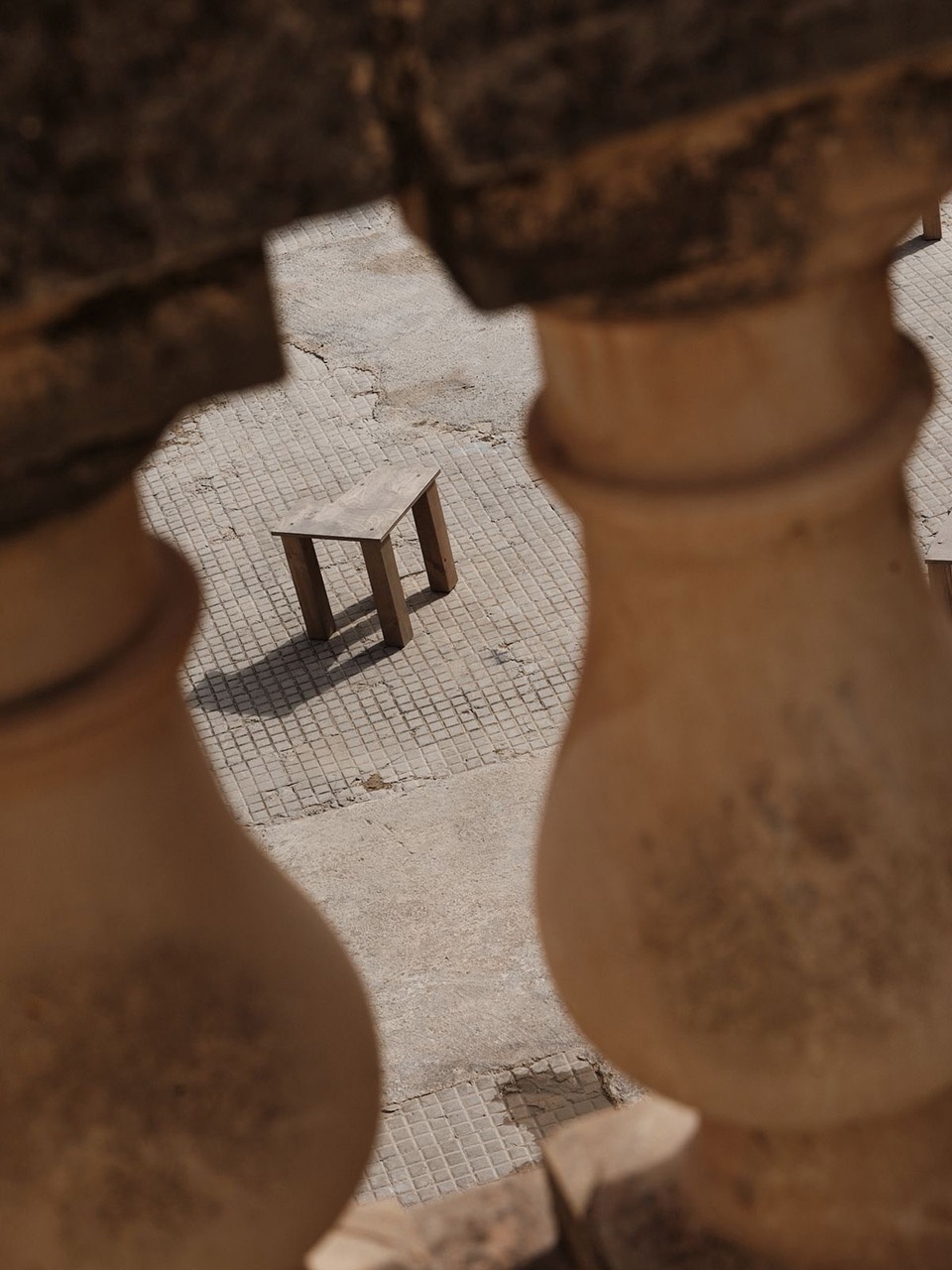
▼从上方俯瞰下方广场,
Looking down from above at the square below © Yorgos Kaplanidis
通过将线性边界转化为圆形围合空间,并将其置于入口与过渡节点之中,项目重新诠释了一种熟悉的建筑类型,并提出建筑的另一种可能角色:一种支持亲近、使用与共享在场感的结构。
By converting a linear boundary into a circular enclosure and situating it at a point of entry and transition, the project proposes a reinterpretation of a familiar typology, suggesting an alternative role for architecture as a structure that supports proximity, use, and shared presence.
▼细部,detail © Yorgos Kaplanidis
Studios: Klelia Siska Studio, balcony studio
Pavilion Design & Artistic Direction: Klelia Siska, Arsenios Zachariadis
Organization Consultant: Alexandros J. Stanas
Communication & Sponsorship Manager: Jesus Kallergis
Photography: Yorgos Kaplanidis
Construction: Bonnici Group



精彩评论文明上网理性发言,请遵守评论服务协议
共0条评论